
Secure SAR response.
On time. Every time.
Secure SAR response.
On time. Every time.
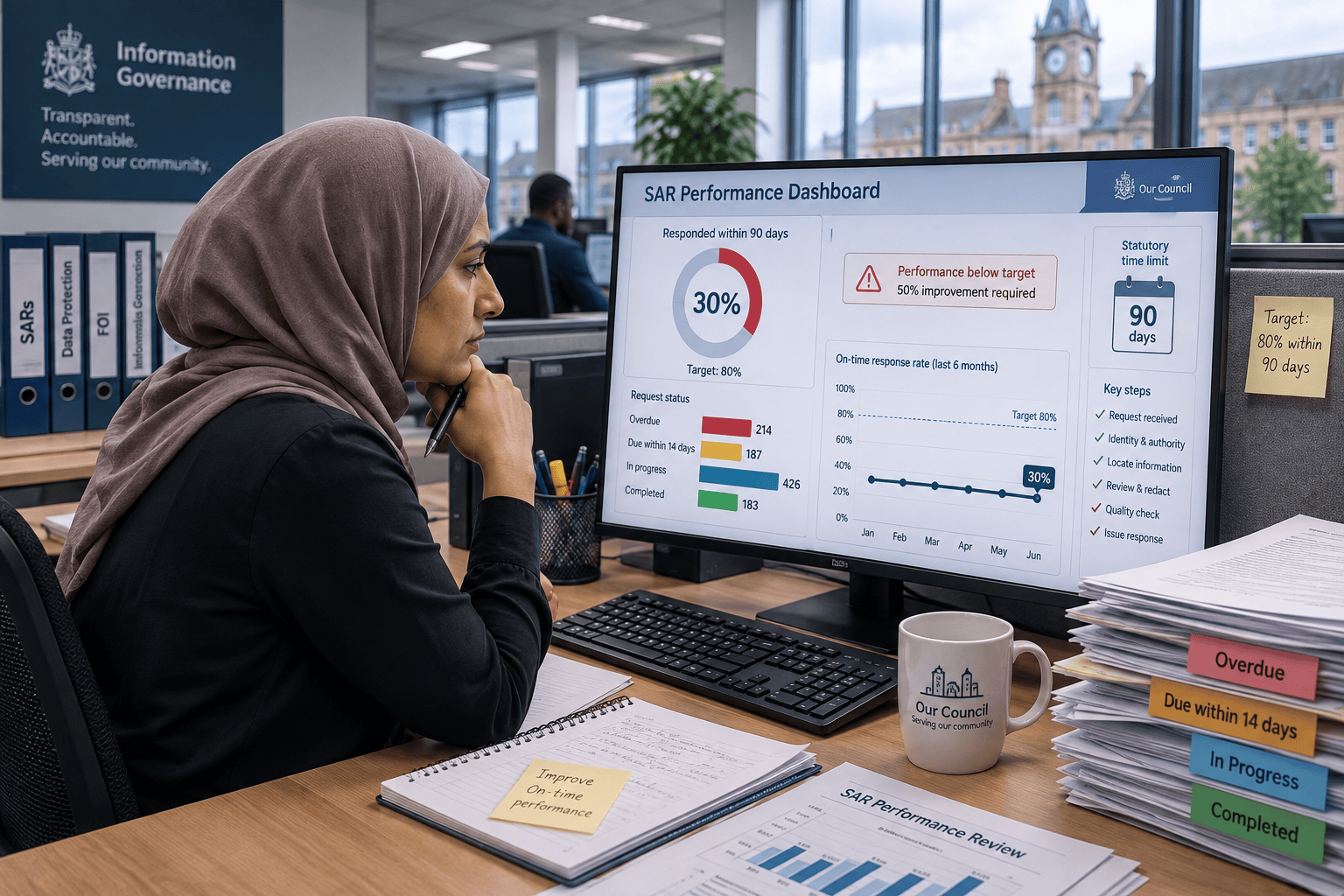
The Result of Disconnected Systems Within Council SARs
The Result of Disconnected
Systems Within Council SARs

42,315
Data protection complaints received by the ICO in 2024/25.

ICO Action
Persistent failure to meet SAR obligations may result in formal ICO regulatory action.
30%

Up to 72,000
Complaints forecast by the ICO for 2025/26
What Our Solution Provides
Significant Reduction
in Cycle Time
Significant Reduction
in Cycle Time
Well over 75% achievable depending on the amount of human effort removed.
SAR Requests
Delivered on Time
SAR Requests
Delivered on Time
Fewer mistakes, less rework and higher quality redaction packs every time.
Reduction in the Time
Taken to Redact Documents
Reduction in the Time
Taken to Redact Documents
AI technology can auto redact and facilitate human approval. Staff can add new redaction criteria and the model learns.
Overall Reduction
in Lead Time
Overall Reduction
in Lead Time
All SARs resolved in statutory timeframes, improving compliance and reducing escalation risk.
ROI Delivered Within
Year 1 of Deployment
ROI Delivered Within
Year 1 of Deployment
Measurable return through reduced manual effort, improved efficiency and lower operational cost.
Protecting Individuals Through
Indirect Identification Redaction
Protecting Individuals Through
Indirect Identification Redaction
Happier residents, more productive teams and greater confidence in your processes.
Governed Connected Workflow
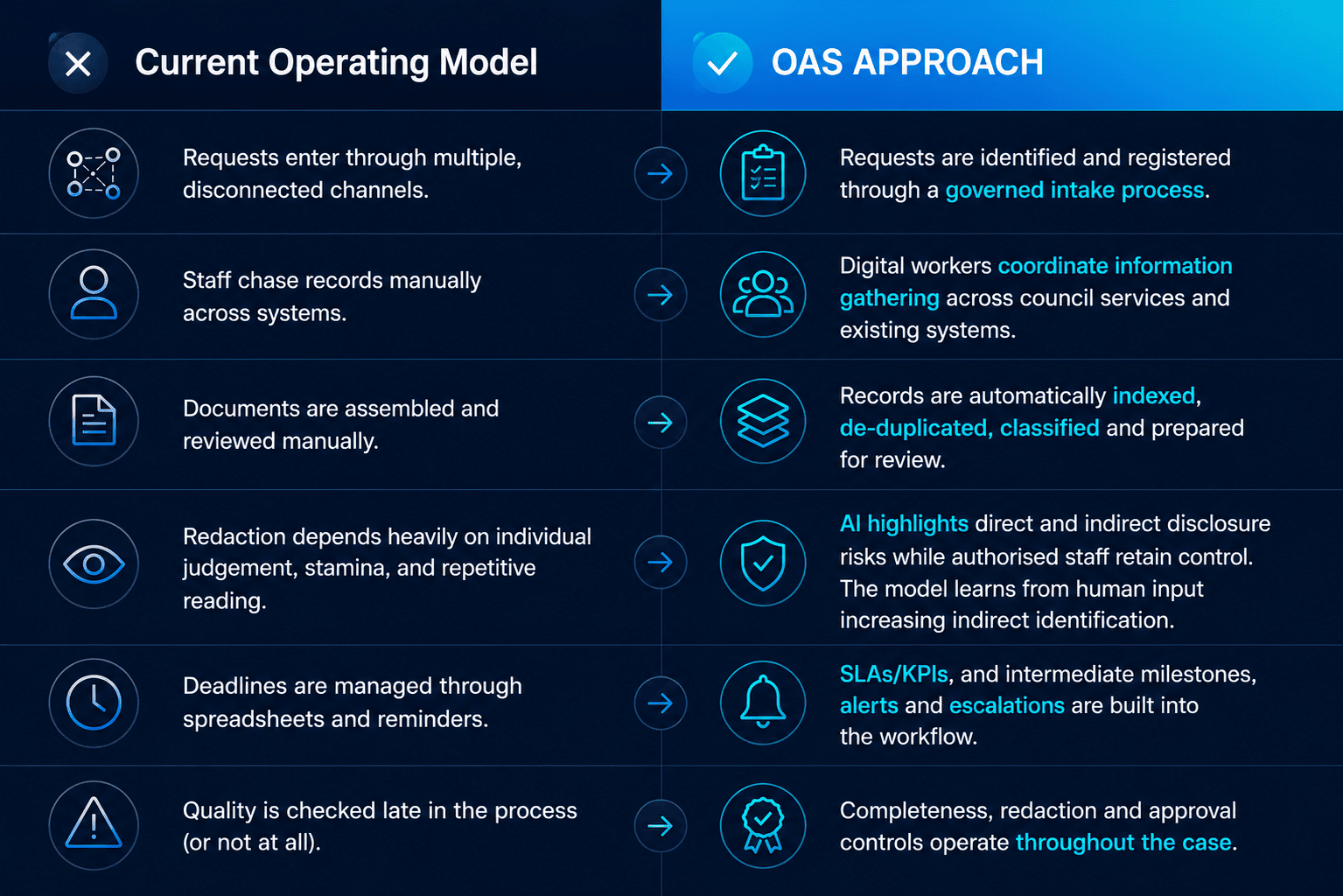
Every Subject Access Request follows a structured, governed workflow from initial receipt through to secure disclosure.
By orchestrating each stage of the process, OAS coordinates information gathering across council services, automates repetitive administrative tasks, supports staff with governed AI, and maintains complete visibility, auditability and control throughout the lifecycle of every request.
Our indirect identification redaction capability
Our indirect identification redaction capability
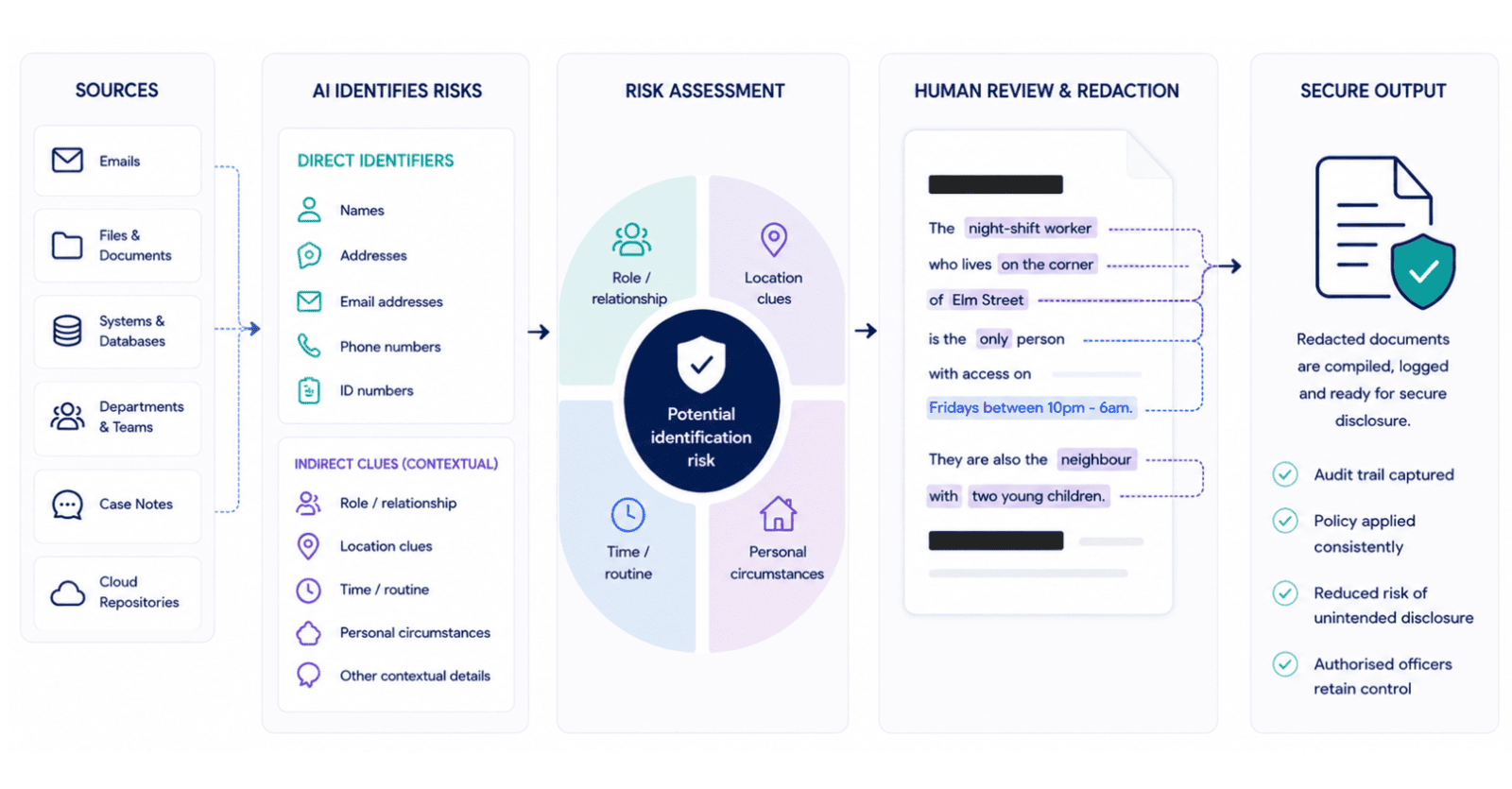
Direct identifiers such as names, addresses and contact details are usually obvious.
The greater risk is indirect identification — contextual clues that may appear harmless on their own, but can reveal who someone is when combined.
OAS uses governed AI to identify both direct and indirect disclosure risks, helping authorised officers review documents more quickly and consistently while retaining control of the final redaction decision.